In this article
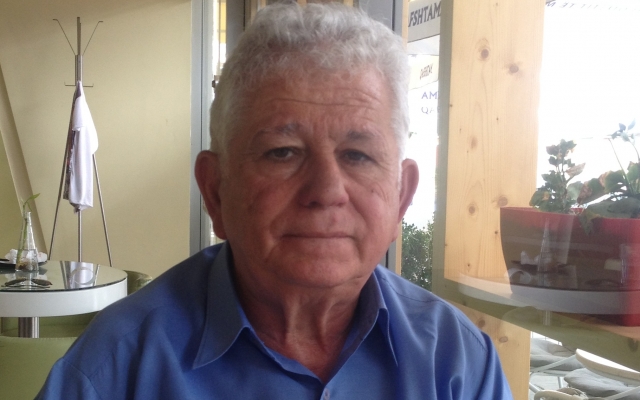 You can spend your whole life serving people and still find that institutions show you no respect. This is the story of Dr. Agron Islamaj, a neurologist: a 43-year history of caring for the sick. A history that holds 8 years of suffering in internal exile, but endless dedication to people in need.
The communist system punished Dr. Islamaj, while the democratic system gave him no recognition. But he found it all among his patients, who never forgot him and stood by him even in the hardest moments. Today, although he is 66, the doctor cannot go without serving others…
“When I have no patients to see, I feel bad,” he says, making no attempt to hide his emotions. Although he no longer works at Tirana’s Central Polyclinic, where he had worked since 1998, nothing stops him from continuing to see patients at home, because Dr. Agron is always in demand. “People often come looking for me.
“For example, last night I visited one patient in Tirana e Re, another in Kinostudio, and saw two more at home. I usually see them here, but I also go to their homes, because people are ill and sometimes cannot move,” says Dr. Agron.
Although he is not in good physical condition, having injured his left knee, he is always ready when it comes to serving others. As he leads us to his house near Partizani High School in Tirana, many passersby greet him.
Walking as best he can on his injured knee, the doctor welcomes us into his home, into the “modest” study, as he likes to call the room filled to the brim with books, where he also receives his patients. Seated in a chair beside his desk, he tells us about his research, his publications in various newspapers and journals, and his collaborations with other doctors. He also shows us his latest publication, the monograph “The Epidemiology and Clinical Rehabilitation of Ischemic Cerebral Accidents.”
His first patient
A tireless student, the doctor begins to describe the difficulties he has endured in his life: from his education and first day at work, through persecution and the events of the turbulent year 1997, to the present, when they “replaced” him. As he speaks, the trembling of his words betrays his emotion.
He describes his first patient. He tells us he remembers her even today because she shook him so deeply. “I had not been working at the neurology clinic for long.
“I remember being assigned to treat a high-school girl, the daughter of a journalist, who unfortunately had a brain tumor. Unlike the other doctors, I had managed to gain her trust. That left me feeling close to her.
“The diagnosis was a tumor in the brainstem, a difficult area to treat, especially at that time, around ’75, when the equipment was not available. After 10 days of treatment, her condition worsened.
“She became clinically dead and never opened her eyes again. It is a case that has stayed with me to this day. It shook me so much that I went to Professor Preza (Dr. Bajram Preza, the founder of the neurology service in our country) and told him: ‘I do not want to work anymore!’
“He saw the psychological state I was in and kept me close, advising me as only he knew how. I was deeply shaken.
“It took me three days to return to work, and I still remember that experience. I still remember that girl, for whom we could do nothing,” the doctor says, his voice trembling.
But this period of Dr. Islamaj’s life also has bright colors, not only gray emotions.
Meeting his future wife
Explaining that, alongside his work, he taught as a part-time lecturer at the Faculty of Medicine, the doctor tells us that this was also where he met Esmeralda Kalo (now a dentist), the young woman who would later become his wife. “While I was teaching, I met Esmeralda, my wife. In a love story within medicine, we got to know each other and, as was customary, had those meetings with our families, and so…” the doctor recounts with some shyness, before beginning to discuss the political problems that later dictated the course of his life.
From Tirana to Gramsh after his father’s conviction for agitation and propaganda
“Things were going well. I had even prepared my dissertation for the academic degree, but in 1983 my father was charged under the notorious law on agitation and propaganda. We were forced to move to Gramsh, and not only did I not receive the degree, I was forced into a career completely different from the one I had originally imagined.
“In Gramsh, I was assigned to cover the services that were missing. So I provided neuropsychiatric care.
“Although I often had to report to the local security branch and face periodic searches and restrictions, I did not become discouraged. I continued to work with the same dedication.
“To help people who had suffered strokes and had paralysis, I tried to establish a good rehabilitation unit. In this way, we secured some very useful equipment.”
But beyond politics, how did ordinary people receive Dr. Agron Islamaj’s work? He tells us that, despite the political punishment he had suffered, ordinary people stood by him. “Despite everything, the people of Gramsh saw in me someone who served them, and they appreciated me for it.
“I have the very best memories both of the team at the time and of the people from the surrounding areas.” During this period in Gramsh, Dr. Islamaj often had to serve as the doctor on duty, as the next story he shares with us illustrates. “I remember one night when a woman who had lost a pregnancy came to the hospital with heavy bleeding.
“We had neither a surgeon nor a gynecologist. I did not know what to do.
“Should I intervene with what I knew from the theory I had learned at school, without practical experience, and risk that woman’s life? Or should I refer her to the central hospital, waiting for an ambulance, in which case she would die from blood loss?
“I decided that we should intervene ourselves. Together with a midwife we had, we took the woman into the operating room. Very frightened, but believing we were doing the right thing, we cleaned her out and managed to stop the bleeding.
“I do not know how we did it, but I know that she recovered very well, and to this day she calls me to thank me.” This was one of the many cases the doctor told us he had treated in Gramsh. The years passed and the communist system fell, but Dr. Agron’s suffering would not end.
“In 1991, during the country’s democratization, we returned to Tirana, but found our house occupied. We had to go through court cases simply to get our home back.
“When my father saw what happened after our internal exile, he took it badly, because he had expected something completely different, and he died very soon afterward. My mother died a year after him.
“So my parents did not really get to enjoy this change.” But despite this experience, Dr. Agron continued to serve people in need.
Amid the bullets, but still on duty
He moved to outpatient care in Vorë and tells us that, despite his workload, he did not sit idle. “Here too, I established a neuropsychiatry unit for the first time,” says the doctor, who was serving in this area when the unrest broke out in 1997. “We were at work when the terror of that March began.
“We saw young men picking up guns and firing, firing constantly and everywhere. Of course, we did our work, although it was difficult amid all that gunfire.
“But when we finished, they blocked the minibus that took us back to Tirana. Those who could found a private car and returned; those who could not stayed there that night,” recalls the veteran doctor, adding that during that period he also had to encounter the notorious gangs on the roads.
“We went through gunfire to see patients, including patients who were somebody at the time. I remember having to go to Cërrik for one such visit, and gangs stopped us in Kërrabë. It was truly terrifying, but when we explained who we were and why we were traveling, they let us pass.”
16 years at the Central Polyclinic, then replaced after a knee injury
These are some of the experiences of Dr. Islamaj, who after the unrest served for 16 years at Tirana’s Central Polyclinic. That service was nevertheless not sufficiently appreciated, because today he no longer works there.
“They told me over the phone that they had replaced me,” says Dr. Islamaj, now 66 and holding the degree of Doctor of Science. “I injured my knee while we were on a visit to Lezhë.
“On the way back, the driver had an accident and I injured my left knee. I wanted to go to Macedonia for treatment, so I took leave. But meanwhile, they called and told me: ‘Do not come back, we have replaced you!’
“That was very hard. To work your whole life, to do as much as you can for the good of others, and then be treated like this. I would have liked at least to have been told in person.
“To have been called in and told face to face, not over the phone. But, to tell the truth, I took this in my stride too. I have been through so much in life that this did not seem particularly different.
“Fortunately, there has been someone to appreciate me. The patient! There is no greater recognition than that of the person you serve,” says Dr. Agron Islamaj, who nevertheless continues to care for people in need at his home.
In service from 1971 to the present
Dr. Agron Islamaj was born on 20 January 1948 in Tirana. In 1970, his love of medicine led him to complete his studies at the Faculty of Medicine. A year later, on 3 January 1971, he began work as a neurologist at the Neurology Clinic.
Alongside his work, he devoted himself to research, specializing in neurology and diseases of the brain’s blood vessels. Continuing in this direction, in 1982 he worked on a dissertation titled “Epidemiological, Clinical and Rehabilitation Studies of Ischemic Cerebral Strokes” to obtain the degree of Doctor of Science, but for political reasons he was unable to defend it. That year, his father fell victim to the notorious law on agitation and propaganda, and after 14 months of investigation the family was sent into internal exile in the village of Ermenj, Gramsh.
In this district, where medical shortages were severe, Dr. Islamaj worked as a neuropsychiatrist, creating this previously nonexistent service in the area for the first time. He also established its first rehabilitation unit, primarily for neurological patients. Despite the conditions and the political stigma that followed him, his years of work earned him the respect of Gramsh’s residents.
After eight years of internal exile, the beginning of the country’s democratization in 1991 brought some relief from his suffering, and he returned to Tirana with his parents. During this period, as part of the rehabilitation of people persecuted for political reasons, he resumed work at the clinic where he had first started, the Neurology Clinic. Dr. Islamaj remained there until 1993, when he moved to Tirana’s outpatient service, at the Vorë Health Center.
Seeing the gap at this health center, the doctor established a neuropsychiatry service, which he provided to people in need until 1998. That year, Dr. Islamaj moved to Tirana’s Central Polyclinic, where he worked for 16 years, until this year.
Meanwhile, in his research, Dr. Agron Islamaj returned to the dissertation topic he had abandoned for political reasons in 1982. After reformulating his thesis and defending it with the highest assessment, he obtained the degree of Doctor of Medical Sciences in 2002.
Also in his academic work, he specialized in physiotherapy at Vojo Kushi University in Tirana in 2005. It should be said that Dr. Islamaj has also contributed to teaching. From 1975 to 1983, he was a part-time lecturer in neurology at the Faculty of Medicine.
Meanwhile, from 2002 to 2010, he worked as a part-time lecturer in the Department of Sports Medicine at Vojo Kushi University of Sports. Dr. Islamaj speaks three languages: French, Italian and Russian. It is this aspect of himself that he has passed on to his daughter, who is pursuing higher education in foreign languages.
Published in “Shekulli” on 12/12/2014
* This article was reviewed and corrected on 8 October 2026.