In this article
Viral illnesses and respiratory diseases
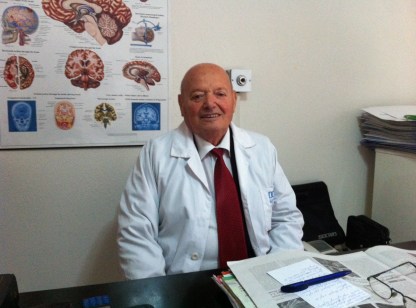 The drop in temperatures in recent days has brought the return of viral illnesses that often cause numerous complications in the respiratory tract. Complications that can also lead to death. Many people turn to flu vaccines as a way to avoid catching the virus or developing its complications.
But Prof. Dr. Elez Selimi, a pulmonologist who has spent a lifetime treating respiratory diseases, is skeptical, telling us that the flu vaccine has proved ineffective. He explains the difference between influenza and the pulmonary infections that often accompany it. Among other things, he says that there is a vaccine that has proved quite effective, at least in preventing complications.
This vaccine does not fight influenza but helps people with chronic illnesses get through it more easily. The doctor says that a 7-year study of this vaccine in Albania produced positive results.
Professor, as usual, these cold days have brought the first cases of viral illness and many people coughing in the streets. What causes a cough, Professor? Is it the first sign of a cold?
Should we take it seriously, and who is most at risk?
It should be said that people do not adjust immediately to changes in temperature. That is why cold weather also brings signs of the body’s response. The first response comes from the respiratory system, because this system has a particular characteristic: it is in direct contact with the outside environment.
The oxygen we take in comes from outside, from the environment around us, so changes in the climate are reflected immediately in this organ first. When we catch a viral illness, one of the first responses is an increase in secretions in the respiratory system, which then brings on a cough. A cough is simply the respiratory system’s response to expel excess secretions, which also contain microbes from the mucous membranes.
Those most at risk in this respect are people with chronic respiratory diseases. These people are at risk because the disease itself has made them more vulnerable: their lungs have been damaged by the chronic illness, they cannot breathe properly, their blood oxygen levels are low and they are therefore physically weaker. So, with the low outdoor temperatures on the one hand and a cough with increased secretions on the other, their health deteriorates to a degree, and these people, at least, must take it very seriously.
Professor, how does a cold differ from ordinary influenza?
Ordinary people confuse the symptoms, and that also contributes to their neglecting to see a doctor. In addition to the symptoms it shares with a cold, such as coughing or a runny nose, influenza is usually accompanied by a high fever, aching limbs, body aches, neck pain and digestive disturbances. These symptoms usually last 3-4 days; after that the fever drops, whereas a cold lasts longer.
But what do we risk by neglecting this?
Neglect can take two courses. The first is when the body is strong: the person neglects the illness but gets through it. In other words, they suffer for a few days, but the body fights it and recovers.
The other course is when the body is not so strong: the person neglects the illness and a complication develops, leading to bronchitis, bronchopneumonia or an even greater and more serious complication, such as death.
The doctor’s position on vaccination
How can these be prevented, Professor? Does the flu vaccine protect us against influenza and its complications?
The priority is to keep warm and have a good diet with vitamins and fluids. Enclosed rooms where people gather and there is no ventilation should also be avoided; these conditions encourage the virus to spread. In these spaces, those most affected are children who have to be there, followed by elderly people who cannot move around much.
As for the vaccine, I am sorry to say it, but the flu vaccine has not been proved effective either in preventing infection or in preventing its complications. The entire scientific community is skeptical on this point, because the results are poor.
Why?
Because the flu vaccine is based on the core of this virus. Yet the virus consists of a core and haptens, and it is precisely the haptens that influence immunity; they change almost every season. For this reason, the flu vaccine is not of much value. It is not effective.
It is true to a certain extent that this vaccine strengthens immunity, but it does not prevent people from catching influenza. If we made a vaccine for the haptens of a flu virus from this year, that vaccine would have no effect on next year’s virus, because the haptens would have changed.
But is there no other way to protect ourselves, at least against the complications influenza causes?
First, we need to explain what causes the complications. It has been established that influenza damages the bronchial mucosa of the respiratory system, creating favorable conditions for saprophytic microbes such as streptococci, staphylococci and others to infect the respiratory system. From that point on, we are no longer dealing with influenza but with a pulmonary infection.
These microbes cause infections that then lead to bronchitis, bronchopneumonia and so on. These are complicated infections that can even cause death in people with chronic illnesses. At this point, there is a way to avoid the complications caused by influenza by increasing immunity through another vaccine.
The polyvalent bacterial vaccine is what protects these people from hospitalization. This vaccine, called “Lantigen B,” does nothing against influenza itself but fights severe infections. It is made from the microbes that populate the respiratory tract.
It therefore allows chronically ill people, even if they catch influenza, to get through it in a mild form, without the usual complications.
Is this vaccine effective?
We conducted a 7-year study in Albania to demonstrate its effectiveness, and I can tell you with complete, substantiated confidence that we had many patients from all age groups, but the aim was to administer it to people with chronic pulmonary diseases, and I can tell you that the results were convincing. We focused on chronically ill patients who, because of influenza, had to be admitted to hospital at least two or three times a year with severe infections that could even lead to death. We vaccinated these people who had COPD, that is, chronic bronchial disease, and it is true that they were spared hospital: they were no longer admitted.
Now that we have completed this study, I can tell you that at least this vaccine, the polyvalent bacterial one, is effective. When we distributed it in October, patients would come of their own accord and say: “We stayed out of hospital! We want that vaccine. Bring us that vaccine!”
More than 35 years of service
Prof. Dr. Elez Selimi has more than 35 years of experience and is among Albania’s most highly regarded doctors. Specialized in internal medicine, pulmonology and pathophysiology, he is a tireless researcher with some 8 scientific books to his name. He founded the pulmonology specialty in 1976 and pioneered many medical treatments for pulmonary diseases in our country.
Tireless, and despite being 74 years old, he continues to be there for people in need, providing pulmonology services at a private clinic every day for at least two hours.
Professional achievements
- Founded the pulmonology specialty in 1976
- Head of this specialty from 1976 onward.
- First introduced protein electrophoresis in Albania in 1962.
- Led the research group on the epidemiology of arterial hypertension in Albania, during which 84 000 people from different age groups were screened.
- First introduced pulmonary function tests in Albania in 1976.
- First introduced lung studies using radioactive isotopes in Albania, including pulmonary scintigraphy and the detection of cancerous metastases in lung cancer. These methods have been used successfully to diagnose pulmonary diseases since 1977.
Published in “Shekulli” on 28/11/2014