In this article
The trial and the context of this analysis
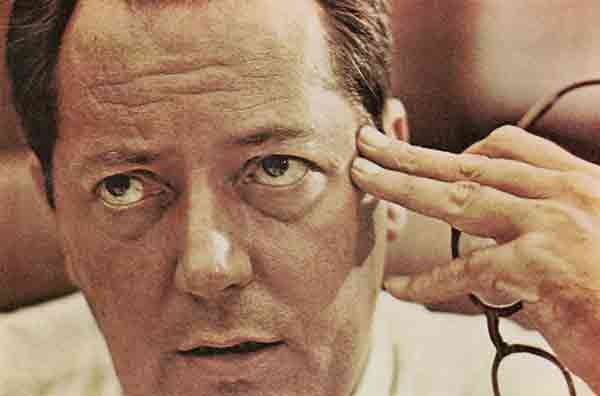 In January 1969, roughly six years after the assassination, prosecutor Jim Garrison brought what the original article describes as the only trial held to that date over the assassination of President John F. Kennedy, specifically accusing businessman Clay Shaw of conspiracy against the US president. Before then, the Warren Commission, appointed by President Lyndon Johnson and conducting its investigation from November 1963 to September 1964, had concluded that Lee Harvey Oswald killed Kennedy alone, just as Jack Ruby acted alone in killing Oswald two days later. This study examines Garrison’s closing courtroom speech before the jury’s verdict, as dramatized in the film.
The speech comes from Oliver Stone’s JFK (1991), in which Kevin Costner plays Garrison. It is a cinematic text, not an authenticated transcript of the historical trial.
To analyze an American prosecutor’s courtroom rhetoric, we must first consider the author’s premise that US courtrooms, and the conception of trials themselves, differ fundamentally from European courts, especially Albanian ones. In the usual European arrangement described here, two benches, one for the accused and the other for the complainant, face a raised table occupied by a panel of judges, sometimes three judges or a single judge depending on the case; in the United States, an open space lies between these positions. That space becomes a stage on which the two sides present and perform their prosecution or defense “script.”
American trials are thus, in this account, something like a performance, a theater in which people act. The familiar shouted “Objection, Your Honor” illustrates this theatricality. The explanation offered is that guilt or innocence is decided by a group seated beside the courtroom, the jury, made up of 12 people, with the number varying between criminal and civil cases, who are outside the legal profession and lack legal training; they determine guilt while the judge determines the sentence.
This group is the advocates’ target, the people they must persuade, which is why each side often objects to the other’s manner of speaking when it considers that certain aspects of the discourse are seducing or intimidating the jury. In this account, American proceedings are more emotional than European or Albanian proceedings, which focus more on legal rules and their interpretation than on elocution and disposition, the message and its delivery, because American advocates must persuade people without legal training who nevertheless hold the decision in their hands. Garrison must therefore persuade the jury that his investigation, arguments and evidence establish Clay Shaw’s role in the conspiracy; the author’s reading is that, although he fails to persuade it on that point, he persuades the jury and much of the audience inside and outside the courtroom that a conspiracy existed.
The speech and the analysis
The extended film dialogue on missing evidence is omitted here.
Here Garrison begins assembling the arguments and foundational facts that will support his syllogism. By presenting missing key evidence as indisputable, and as a problem unrelated to his investigators’ competence, he begins reconstructing the event around evidence that conditions any account of the truth. His narrative uses present-tense verbs, actions of burning, ordering, sending and obstructing, to make events feel unfinished, drawing the jury into the story and creating both immediacy and suspense.
We also notice how Garrison addresses the government as belonging to the jurors, distancing himself from it while identifying the core of the thesis he is beginning to develop: the state is indirectly responsible for the killing. He seeks to draw the audience further in by exposing its indifference to that situation.
The film’s speculative reconstruction of the shooting teams is omitted.
Garrison continues reconstructing the event as though it were unfolding before everyone in the courtroom now. Again, present-tense verbs convey his idea and the event’s dynamics. As he established at the outset, and will establish again, the absence of key evidence, including the autopsy and ballistic evidence from bullet marks on the car, forces him to concentrate on witnesses and reconstruct the whole event speculatively from their accounts.
On those accounts he bases his suggestion that Clay Shaw organized the shooters and placed them around the square. Short sentences convey the volume of movement, an event unfolding in fractions of a second through the perpetrators’ many actions, even before the movements of law enforcement are considered.
The film’s shot-by-shot account and frame-number sequence are omitted.
- The way Garrison describes the situation is frightening. His speculation goes so far as to suggest that the killers intended a macabre execution through fire from three directions, rather than simply a killing that, on his own reconstruction, could have been achieved easily as the motorcade approached the Elm Street turn. His details, including the car’s speed, the perpetrators’ movements and radio communication, combine with the short sentences to make the account chilling, stimulating and now commanding the jurors’ emotions.
By showing the footage, Garrison has now won over the jurors. Like spectators at a film premiere, they feel privileged and give him their full attention. He does not waste it.
He interprets each image, replaying it and repeating his interpretation several times to fix his idea in their minds, until he returns to his thesis that there was more than one shooter and that the fatal bullet could not have come from Oswald, positioned above and behind the motorcade; Kennedy’s bodily movement, reinforced through repetition, suggests to Garrison that the bullet came from the front. Here he emphasizes his investigators’ request to examine Kennedy’s brain, rejected with what the analysis calls the absurd explanation that it had disappeared, and heightens the jurors’ emotion by reading Governor Connally’s lips to dramatize the scene.
The subsequent film dialogue about police conduct and witnesses is omitted.
- Garrison continues reconstructing the event from testimony in the same style: short sentences and present-tense verbs. He now supplies details such as times and people arrested to increase both credibility and the jurors’ suspicion of law enforcement, drawing them ever closer to his thesis that the state participated indirectly in Kennedy’s assassination.
Using different witnesses, Garrison briefly describes Oswald’s location. He supplies times while allowing some latitude even in his own evidence, extending one estimate to 12:20. Through the testimony, he stresses that Oswald was on the second floor eating lunch before the shooting, rather than on the sixth.
By introducing two further accounts, he emphasizes that two people were later seen at the window, making his earlier theory of three teams, each with at least a spotter and a shooter, internally coherent: while Oswald was eating lunch, witnesses saw someone else, the spotter, and later both men, then indicated where some shots had come from. Garrison identifies so strongly with this testimony that he includes himself among those seeing the men.
The film dialogue testing Oswald’s movements against the available time is omitted.
Here comes Garrison’s first argument about Oswald: from several facts presented by witnesses, he reasons about the time Oswald would need to move between positions and establish an alibi, leaving the conclusion that something is wrong either with the testimony or with the Warren Commission’s account of Oswald alone on the sixth floor and acting alone throughout. The details are specific: within 90 seconds of the shooting, he was on the second floor, after supposedly firing three shots in 5.6 seconds, concealing traces and racing to the place where Officer Baker saw him without his being out of breath or the two other employees seeing him descend. Garrison clearly disbelieves this account, as is also evident in his alternative suggestion that Oswald was on the second floor waiting for further instructions by telephone.
In this way, Garrison deepens the jurors’ doubts as they begin reconsidering the Warren Commission’s conclusion.
The extended film account of Oswald’s movements, arrest and treatment is omitted.
In this long passage, Garrison makes clear his view of the entire operation leading to the president’s assassination. He moves from Oswald’s departure from the depository to the logical reasons for going home for a gun, going to the Texas Theatre after killing a police officer, apparently for a meeting, and conspicuously entering without a ticket, then to the questions left unexplained: why the building was not sealed once shots were identified as coming from it, why two witnesses whose accounts differed from the Warren Commission’s were not considered, why Officer Poe’s initials disappeared from the cartridge cases associated with Tippit’s killing, and, most strikingly, why a report of an unpaid ticket brought 30 police officers. All these questions lead Garrison to conclude that everything was predetermined and that someone inside must have betrayed Oswald; he therefore imagines that Oswald himself may have reached that conclusion.
His rhetoric acquires a particularly effective comparison through which he says everything. He compares Oswald’s arrest to the Reichstag fire, used by Hitler in 1933 to eliminate the Communist Party and consolidate power, suggesting that the arrest likewise closed the case and disposed of its remaining questions. The prosecutor completes the enthymeme by arguing that the media were both fed information about the authorities’ evidence and encouraged to shape public opinion toward Oswald’s guilt.
The film dialogue about Ruby, publicity and propaganda is omitted.
Here the prosecutor’s attempt to lead the public emotionally becomes clear. Garrison keeps invoking Hitler. He also cites formulations associated with Nazi propaganda.
Less than a quarter-century after the Second World War, in the middle of the Cold War, the comparison with Hitler carries considerable force for Americans. Continuing the theory of a staged operation that he compared with Germany in 1933, Garrison goes as far as treating Oswald’s killing as prearranged. Through the argument that nobody would mourn him, he suggests that the justice so eagerly demanded by the media had been manufactured, and through the Hitler reference insists that the whole account is a lie.
The film’s comparisons with other assassinations and its rhetorical questions are omitted.
Eloquence reaches its peak here. Garrison sketches a psychological profile of Oswald and places him alongside the killers of Robert Kennedy and Martin Luther King, indirectly arguing that the state was similarly responsible for those murders. In dressing his speech, he briefly advances the central thesis that these killings were carried out by a group of officials committed to war.
His rhetorical questions, especially those about the justice system, address the jurors as a challenge to take a step forward. He then connects the discussion of concealed killings with the deaths of two principal witnesses, Jack Ruby and David Ferrie, which came unexpectedly in succession in January and February 1967. The questions about them reinforce his indirect suggestion that something may have come from within the system or the state.
The long closing film passage, including its literary quotations, is omitted.
Author’s explanatory identifications from the omitted passage: John Harington is identified as an English poet (1561–1612), Edward Paul Abbey as an American writer and naturalist associated here with advocacy on patriotic issues, and Alfred Tennyson as a British Victorian poet. Their quoted verses and sayings are not reproduced.
- This is where Garrison’s principal thesis finally emerges. After a series of rhetorical questions that leave the jury immersed in doubt, the prosecutor presents his thesis as the only remaining alternative capable of explaining the assassination, as his questions about withheld evidence have suggested. He includes the jury in that conclusion, directly asking it to join him openly in this speculation as the only coherent explanation of events.
Author’s explanatory insertion retained from the omitted dialogue: J. Edgar Hoover led the FBI’s predecessor from 10 May 1924 and continued heading the agency, renamed the FBI in 1935, until his death on 2 May 1972 at 77. His total tenure was about 48 years, including about 37 under the FBI name.

Concluding assessment of the speech
Garrison’s rhetoric about truth, the use of his son to present himself as its champion, and the references to witnesses and ordinary letter-writers doing their part in seeking it all aim to inspire the jury through those acts. The poets’ words, and especially Kennedy’s own words at the close, brilliantly engage the wider public as well: the prosecutor’s target expands to all American citizens, giving the speech an enduring reach that would later inspire many to believe Kennedy was killed by a conspiracy rather than one person. In the author’s reading, this was Garrison’s achievement: although he did not persuade the jury that Clay Shaw belonged to the conspiracy, he persuaded it that more than one person had carried out the assassination.
If we conducted this analysis politically, taking account of Jim Garrison’s membership of the Democratic Party, the speech would be seen from another angle. Its core message would nevertheless remain the same.
[1] John Connally: then governor of Texas, a passenger in President Kennedy’s car who was seriously wounded.
[2] Texas School Book Depository: the schoolbook warehouse building.
[3] Dal-Tex: the Dallas textile building beside the depository, across South Houston Street.
[4] Clay Shaw: a former military man and later a successful New Orleans businessman, the only person charged with conspiracy against President Kennedy, as the original note describes him.
[5] David Ferrie: a former pilot found dead on 22 February 1967, days after Jim Garrison publicly identified him as a suspect in the Kennedy investigation. He was described as a key witness because of alleged contacts with Oswald and Shaw.
[6] The South Houston Street–Main Street intersection marks the beginning of Dealey Plaza, where Kennedy was fatally shot on 22 November 1963.
[7] Elm Street runs along one side of Dealey Plaza.
[8] At this point Garrison begins showing the jury footage of the assassination, filmed by Abraham Zapruder, which the jurors are described as seeing for the first time. It later became known simply as the Zapruder film.
[9] Zapruder is positioned beside Elm Street, next to the beginning of the parking-lot fence and facing the motorcade; at one point a road sign obstructs the view.
[10] James Tague: a bystander at the assassination scene who suffered a minor cheek injury from an object during the shooting. The Warren Commission took his deposition and discussed the incident in its final report.
[11] Lee Harvey Oswald: a former Marine and defector, accused as the president’s sole assassin, fatally shot by Jack Ruby two days after Kennedy’s assassination. The original describes this as closing the case because he never appeared before a trial court.
[12] The Texas criminal court building stood beside Houston Street, diagonally opposite the schoolbook depository.
[13] Jacqueline Kennedy: first lady and wife of the 35th president, John F. Kennedy.
[14] Jack Ruby: Oswald’s killer, sentenced to death in 1964. In October 1966, the Texas Court of Criminal Appeals reversed the conviction and ordered a new trial in another county. Ruby died on 3 January 1967 while awaiting retrial, after being diagnosed with cancer.
[15] Robert “Bobby” Kennedy: a New York senator and John Kennedy’s brother, killed in 1968 while seeking the Democratic presidential nomination.
[16] Martin Luther King Jr.: a leader of the 1960s civil-rights movement, killed in 1968 after organizing many civil protests seeking greater rights for African Americans.
* Editorial correction, 15 October 2026: The explanatory notes on Tague, Ruby, Robert Kennedy, Ferrie and Hoover, and the Shaw image label, are clarified from the identified records. The author’s film-based rhetorical analysis is retained.